999 vs 925 Silver: What's the Difference & Which Should You Buy
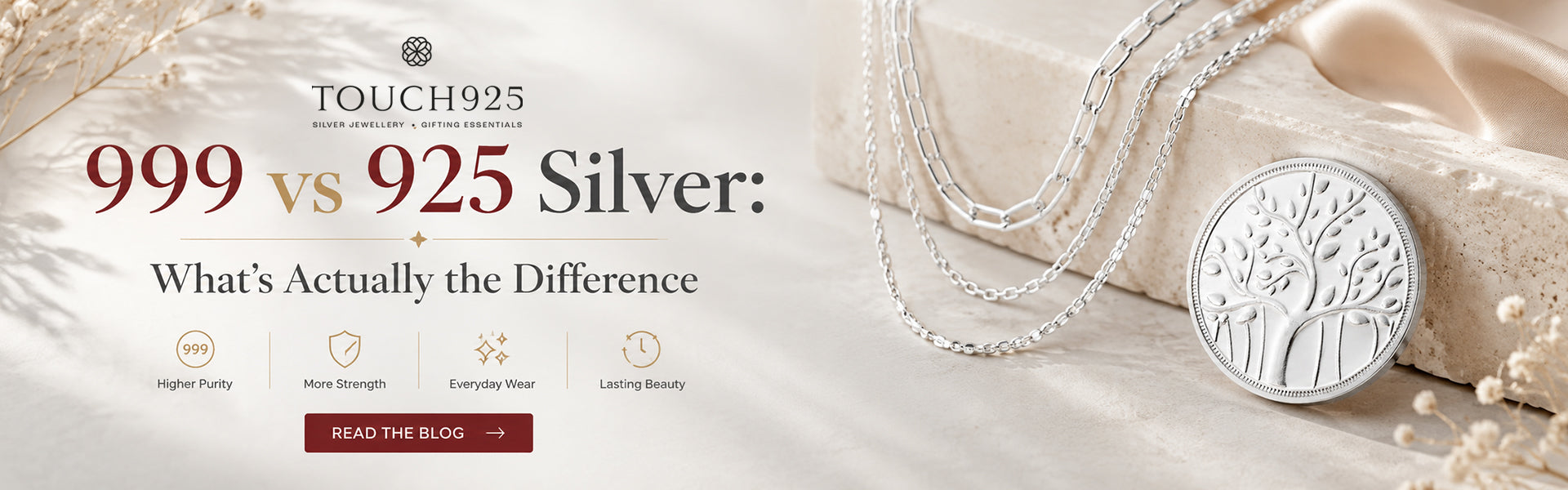
Ask most people what separates 999 and 925 silver, and you'll get a vague answer about one being "purer" than the other. True, but it doesn't explain why it matters, or which one you should actually be buying. It's also one of the most common questions we hear at Touch925, usually from someone standing between two similar looking pieces, unsure why one costs more or why one is marketed for jewellery and the other for coins.
Here's the difference, without the jargon.
What the Numbers Mean
999 silver is 99.9% pure silver. 925 silver, commonly called sterling silver, is 92.5% pure silver mixed with 7.5% other metals, usually copper. That small addition changes more than the purity number suggests.
Pure 999 silver is soft, soft enough that a ring made from it would lose its shape within months of regular wear. Too soft, in fact, to hold intricate jewellery designs or survive daily wear without bending or scratching easily. The added metals in 925 silver give it strength and durability, which is exactly why sterling silver has become the standard for jewellery worldwide, not because it's cheaper or less pure, but because it's actually built to be worn.
This is really the whole story in one paragraph. Everything else is just working out the practical implications of that single trade off between purity and durability.
Where Each One Actually Belongs
999 silver is the right choice for coins, idols, and decorative pieces, items that are meant to be kept, displayed, or used occasionally rather than worn every day. Its higher purity also makes it the more traditional, auspicious choice for religious and ceremonial gifting, the kind of piece that sits in a pooja corner or gets handed down rather than knocked around in daily life. Touch925's 999 purity silver coins collection is built entirely around this idea, coins meant for gifting, safekeeping, and ceremony rather than everyday use.
925 silver is built for jewellery you'll actually wear. Chains, rings, earrings, bracelets, all of it needs to withstand daily movement, occasional knocks, and repeated wear without losing shape. This is where sterling silver's added durability earns its place, the reason a 925 chain still looks the same after a year of daily wear while a 999 piece in the same role wouldn't hold up nearly as well. Touch925's 925 silver jewellery for women collection is designed with exactly this kind of everyday durability in mind, so pieces hold their shape and shine well past the first few wears.
Idols and Home Decor Deserve a Mention Too
It's worth calling out idols and home decor separately, because they sit in a slightly different category from both jewellery and coins, but they follow the same underlying logic. A silver idol or a decorative piece meant for a pooja corner or a display shelf isn't handled the way jewellery is. It isn't bent, stretched, or knocked around throughout the day. What matters far more is the purity of the piece, both for its symbolic value and for the way it's meant to be preserved over time. Touch925's silver idols and home decor collections lean into 999 purity for this exact reason, since these are pieces meant to last generations rather than survive a decade of daily wear.
Which One Should You Buy
If you're buying jewellery, 925 is almost always the right call, it's the industry standard for good reason. If you're buying something to keep or gift for its symbolic value, a coin, an idol, a decorative piece, 999 purity is the stronger choice, since durability matters far less than what the piece represents.
There's a simple way to think about it if you're still unsure standing in front of two options. Ask what the piece is actually for. If the answer is "to wear," go with 925. If the answer is "to keep, display, or gift for what it symbolises," go with 999. Almost every purchase decision falls cleanly into one of those two categories once you frame it that way.
It also helps to think about who you're buying for and how often the piece will actually be touched. A chain someone puts on every morning needs to survive that routine without warping. A coin that gets placed in a pooja tray once a year, or a locker piece that gets taken out only on special occasions, doesn't face nearly the same wear, so its softness is never really a problem in practice.
A Quick Note on Cost
People sometimes assume 999 silver should always cost more than 925 silver, since it's the purer of the two. In practice, pricing depends more on weight, craftsmanship, and design complexity than on purity alone. A heavily worked 925 jewellery piece can easily cost more than a simple 999 coin, even though the coin has the higher purity. This is another reason it's worth thinking about purpose first and price second. Buying based on purity alone, without considering what the piece is actually meant to do, tends to lead people toward the wrong category of product for their needs.
Caring for Each One
The way you store and maintain silver also depends on which type you've bought. 925 silver jewellery benefits from being kept in an airtight pouch when not worn, away from moisture and perfumes, since the copper content makes it slightly more prone to tarnishing with regular exposure. A soft polishing cloth every so often keeps chains and rings looking new.
999 silver, being softer, is best kept away from situations where it could get scratched or dented, which is one more reason it works better as a display or keepsake piece than as something handled constantly. Touch925 coins and idols typically come in their own protective boxes or cases for this reason, so the piece stays in the condition it was gifted in for as long as possible.
A Few Common Myths Worth Clearing Up
There's a persistent idea that sterling silver is somehow "fake" silver or a cheaper substitute for the real thing. It isn't. 925 silver is still genuine silver, just alloyed deliberately to make it fit for purpose, the same way most gold jewellery isn't 24K for similar reasons of durability. Another common myth is that higher purity always means better quality. Quality in silver comes down to craftsmanship, finishing, and how well a piece is suited to its purpose, not purity alone. A beautifully finished 925 chain is a higher quality product for daily wear than a crudely made 999 chain would ever be, even though the 999 piece is technically purer.
There's also an assumption that 999 silver can't be used decoratively at all because it's soft. That's not accurate either. Coins, idols, and static decorative pieces don't experience the kind of repeated stress that jewellery does, so their softness is rarely an issue in the role they're actually meant to play.
Why This Distinction Actually Matters When You're Gifting
If you're buying for yourself, the choice mostly comes down to whether you want to wear the piece or keep it. But gifting adds another layer, because the person receiving it may not know the difference between 999 and 925 either, and the wrong purity for the wrong occasion can quietly undercut an otherwise thoughtful gift. Handing someone a soft 999 silver ring that bends within weeks isn't a great outcome, and neither is gifting sterling silver for a ceremonial occasion where the tradition specifically calls for higher purity. Knowing the difference ahead of time means you can match the purity to the purpose instead of guessing.
This is part of why Touch925 keeps its 999 and 925 lines clearly separated across its collections rather than blending them together. It makes it easier to shop with intent rather than picking a piece and hoping the purity happens to suit the occasion.
Final Thoughts
Neither one is objectively better. They're built for different jobs, and the confusion mostly comes from treating "purity" as the only thing that matters. Once you know which job you're actually shopping for, the choice makes itself.
Explore the 925 silver jewellery collection for everyday wear, or browse 999 purity pieces across silver coins, idols, and home decor at Touch925.
FAQs
1. Is 999 silver more valuable than 925 silver? In terms of pure silver content, yes. But 925 silver's added durability makes it more practical and valuable for everyday jewellery.
2. Can 999 silver be worn as jewellery? It can, but it's more prone to scratching and bending due to its softness, which is why it's less commonly used for daily wear pieces.
3. Does 925 silver tarnish faster than 999 silver? Both can tarnish with exposure to moisture and air, though 925 silver's copper content can make it slightly more reactive. Proper storage minimises this either way.
4. How can I tell which purity a piece is? Look for hallmarking on the piece itself, reputable sellers will clearly mark whether an item is 999 or 925 purity. Touch925 marks this clearly across its coins, jewellery, and decor pieces.
5. Which purity is better for gifting on religious occasions? 999 purity is generally the more traditional and auspicious choice for religious or ceremonial gifting, such as coins and idols meant for a pooja space.
6. Can I buy both purities from the same place? Yes, Touch925 carries both, with 925 silver jewellery designed for everyday wear and 999 purity coins, idols, and home decor designed for keeping, gifting, and display.