The Story Behind Raksha Bandhan: Origins, Traditions & the Meaning of the Rakhi
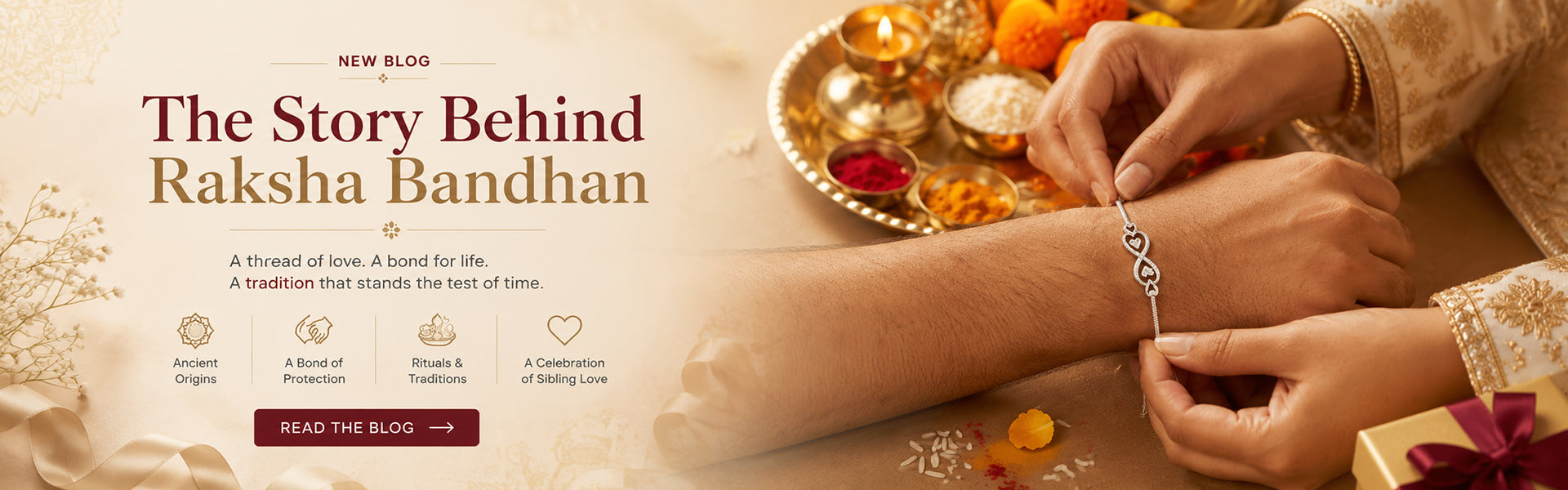
The Story Behind Raksha Bandhan
Raksha Bandhan has several origin stories, depending on which region of India you ask. The details change, but the core meaning stays the same across all versions: protection, a promise, and a bond renewed once a year through a thread tied on the wrist.
Knowing where the tradition comes from makes the ritual easier to understand, especially if you're choosing a rakhi and want the piece to actually match what the festival is about. This is the thinking behind how Touch925 approaches its rakhi collection every year, building pieces that hold up to the meaning of the day instead of treating the rakhi as a throwaway accessory.
Where the Tradition Comes From
The most commonly told version traces back to mythology, where a rakhi tied by a queen was said to invoke divine protection for the person wearing it. Other versions point to historical accounts of women tying a thread on men for safety and support during difficult times. Both versions agree on the same basic idea. The thread is a request for protection, and tying it back is a promise to provide that protection.
This is why Raksha Bandhan was never only about siblings specifically. It's built around the broader idea of looking out for someone, formalised into a simple, physical gesture that gets repeated every year. Touch925 designs its rakhi collection around this same idea of a gesture worth repeating, rather than a one-off purchase.
Why the Ritual Has Lasted
Most festivals change shape over generations. Raksha Bandhan has stayed fairly consistent. Part of the reason is that the ritual itself is simple. A thread is tied, a promise is made, and there's no elaborate preparation required to take part in it. That simplicity has made it easy to carry forward across generations and lifestyles that otherwise look very different from how the festival originally started.
This is also part of why the rakhi itself matters more than people give it credit for. A rakhi that's made to last reflects what the festival stands for. A bond that isn't meant to fade quickly deserves a thread that doesn't either, which is the exact standard Touch925 designs its silver rakhis around.
Regional Variations Worth Knowing
The way Raksha Bandhan is marked also varies by region, which is part of why so many different origin stories exist side by side. In some parts of North India, the festival overlaps with local harvest or seasonal observances, with the rakhi tying happening alongside other rituals on the same day. In parts of Western India, the day is sometimes linked to Narali Purnima, a separate observance tied to the sea and monsoon season, celebrated around the same time.
None of these variations change the core meaning of the thread itself. They simply show how the same basic idea, protection exchanged for a promise, has been folded into different regional calendars and customs over time rather than staying fixed to one single narrative. Touch925's rakhi collection is designed to work across these regional differences, since the meaning stays constant even when the surrounding customs change.
Choosing a Rakhi That Reflects This
If you want the rakhi itself to match the meaning behind the ritual, it helps to choose one built with some intention rather than picking whatever is closest at hand. Touch925 offers a range of silver rakhis designed specifically with this in mind, pieces meant to be kept rather than thrown away once the day is over.
Touch925's Sacred Quartet Rudraksha Rakhi is built around rudraksha, a material that already carries spiritual significance on its own. Pairing it with silver adds a layer of durability the material wouldn't otherwise have, so the piece holds up well beyond the day it's tied. It suits siblings who lean toward a more traditional, spiritually grounded gift rather than something purely decorative.
For a simpler option, Touch925's Beaded Thread Silver Rakhi keeps the design understated while still using silver in its construction, so it's built to last rather than fray or fall apart within a week. It works well for someone who wants the sentiment without a heavier, more elaborate design.
What to Actually Look For When Buying One
A few practical points matter more than most people think when choosing a rakhi, especially if you want it to last.
Material is the first thing to check. Threads alone tend to fray or fade quickly, while silver components hold their shape and shine well past the day itself. This is one of the main reasons Touch925 builds its rakhi collection around silver rather than plain thread or synthetic materials.
Design should match the person you're gifting it to. A rudraksha based design works well for someone who values the spiritual side of the ritual. A simpler beaded design works better for someone who prefers something understated they can keep without it feeling overly ornamental. Touch925 carries both styles for exactly this reason, so the design choice doesn't have to come at the expense of durability.
Comfort matters too, since a rakhi is worn for the rest of the day after it's tied, sometimes longer. A well made piece shouldn't feel heavy or awkward on the wrist, which is something worth checking before you buy. Touch925's rakhis are built with everyday wear in mind, not just a single ceremony.
Pairing a Touch925 Rakhi With a Small Gift
Raksha Bandhan traditionally involves an exchange, the sibling tying the rakhi, and the other sibling giving something in return, usually a small gift alongside a promise to protect. This side of the tradition gets less attention than the rakhi itself, but it's just as much a part of the ritual.
A silver rakhi from Touch925 already fits this exchange well on its own, since it's a gift in itself rather than a disposable accessory. Some families choose to pair it with something additional, a small silver coin, a keepsake box, or another modest piece that carries similar weight. Touch925's broader collections make this easy to put together without needing to shop across several different stores, since coins, rakhis, and small gifting pieces are all designed by Touch925 with the same idea of lasting value in mind.
Rakhi as Something Worth Keeping, Not Just Wearing for a Day
Most rakhis bought each year get removed within a week or two and thrown away once the string starts to fray. A silver rakhi doesn't have to follow that same pattern. Because the material itself holds up, a piece like the ones in Touch925's rakhi collection can be kept afterward, stored away, or even repurposed as a small keepsake rather than discarded the way a plain thread rakhi usually is.
This changes what the gift actually represents. Instead of something worn for a single day and forgotten, it becomes a small object tied to a specific year, a specific promise, something that can be looked at again later the same way old photographs are.
Buying for More Than One Sibling
If you're buying rakhis for more than one sibling, it's worth thinking about whether you want each one to match or differ. Some families prefer identical rakhis across siblings, keeping things simple and consistent. Others prefer picking a different design for each person based on their individual taste. Touch925's rakhi collection includes multiple designs specifically to make this second option easier, so you're not stuck choosing one Touch925 design and repeating it regardless of who it's for.
Caring for a Silver Rakhi After the Festival
If you plan to keep a Touch925 silver rakhi rather than discard it, basic care keeps it looking the way it did on the day it was tied. Storing it in a dry pouch away from moisture and perfumes helps prevent tarnishing. A soft cloth wipe every so often is usually enough to keep the shine intact without needing any special products. This is a small step, but it's the difference between a rakhi that ends up in a drawer looking worn within a year and a Touch925 piece that still looks presentable a decade later.
Final Thoughts
The story behind Raksha Bandhan isn't tied to one specific version of the myth. It's built around a promise that gets renewed the same way every year, consistently enough that the ritual itself has become part of what the festival means. Choosing a Touch925 rakhi that's actually built to last is one small way of matching the gift to that idea.
Explore the silver rakhi collection at Touch925, including the Touch925 Sacred Quartet Rudraksha Rakhi and the Touch925 Beaded Thread Silver Rakhi. Touch925's full rakhi range is built around the same idea covered throughout this piece: a rakhi worth keeping, not just wearing for a day.
FAQs
1. What does Raksha Bandhan actually mean? It translates roughly to "the bond of protection," reflecting the promise exchanged when the rakhi is tied.
2. Is Raksha Bandhan only for siblings? Traditionally centred on siblings, though many families extend the ritual to cousins and close family friends as well.
3. Why is the thread considered so symbolically important? The thread represents a request for protection and a promise to provide it, making the physical object central to the ritual's meaning.
4. Does the type of rakhi matter for the ritual itself? The ritual's meaning stays the same regardless of design, though many people choose a rakhi that reflects the sentiment they want to convey.
5. Why choose a silver rakhi over a regular thread one? Silver holds up far better over time than plain thread, so the rakhi can be kept afterward instead of discarded once it frays.
6. Are Touch925's rakhis suitable for gifting to multiple siblings with different tastes? Yes, the collection includes several designs, from rudraksha based pieces to simpler beaded options, making it easy to pick something suited to each person.