Kamdhenu Cow with Calf Meaning, Symbolism and Cultural Significance in Hindu Tradition
Introduction
Across many traditions of Hindu thought, the Kamdhenu cow with calf has long been associated with nourishment, generosity and the sustaining rhythms of life. Kamdhenu is described in Hindu mythology as a divine cow connected with abundance and benevolence. Over centuries this sacred form became a powerful symbol representing the idea that nature provides generously when treated with care and respect.
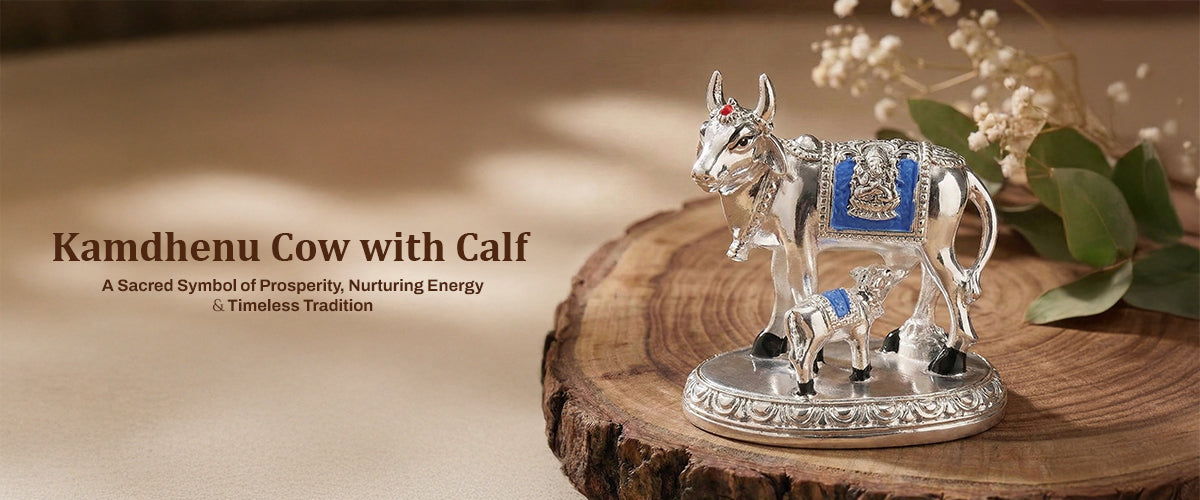
The Kamdhenu cow with calf carries profound symbolic meaning. The presence of the calf reflects nurturing care, maternal devotion and the continuity through which life is sustained across generations.
Because of these associations, the form of Kamdhenu has appeared for centuries in temple carvings, sacred art and devotional objects kept in homes and prayer spaces.
What Does the Kamdhenu Cow with Calf Mean?
In Hindu cultural tradition, the Kamdhenu cow with calf is often interpreted as a symbol of nourishment, generosity and nurturing care. The cow represents selfless giving and abundance, while the presence of the calf reflects protection, maternal devotion and continuity between generations.
Together the cow and calf represent the sustaining relationship between nature, life and human wellbeing. This symbolism explains why the image of Kamdhenu appears frequently in devotional art, mythology and household prayer spaces.
Kamdhenu Cow in Hindu Mythology
The Kamdhenu cow appears in several Hindu mythological traditions and texts, including narratives connected with the Mahabharata and later Puranic literature.
In many accounts Kamdhenu is associated with the hermitage of sage Vashistha, where she is described as a sacred cow capable of providing nourishment and resources required for rituals and guests. Because of this characteristic, Kamdhenu is often remembered as a symbol of abundance and generosity.
Some traditions also refer to Kamdhenu as Surabhi, another divine cow mentioned in Hindu texts. Over centuries these stories developed through different regional interpretations and retellings.
Kamdhenu is also connected with broader mythological themes that describe sacred beings emerging during the Samudra Manthan, the churning of the cosmic ocean.
Although details may vary between sources, the central symbolism remains consistent. Kamdhenu represents nourishment, generosity and the sustaining abundance of nature.
Why the Cow Holds Sacred Importance in Hindu Culture
The reverence for the cow in Hindu culture is closely connected with ideas of nourishment, gratitude and harmony with nature. Historically cattle played an essential role in sustaining agricultural life across the Indian subcontinent by providing milk, labor and agricultural support.
Because of this relationship, the cow gradually became associated with selfless giving and nurturing care. Over time it came to represent gratitude toward the natural systems that sustain human life.
Within this broader cultural context, the Kamdhenu cow is often remembered as a sacred representation of abundance and generosity. Through mythology and devotional art, this symbolic form reflects the values of nourishment, protection and harmony with nature.
Symbolism of the Kamdhenu Cow with Calf
The Kamdhenu cow with calf carries deep symbolic meaning within Hindu cultural traditions.
The cow has historically been associated with nourishment and selfless giving, particularly because cattle played an important role in sustaining agricultural life across the Indian subcontinent.
The presence of the calf beside the cow reflects nurturing care and protection. Together the cow and calf represent continuity between generations and the natural cycle through which life is sustained.
In many artistic depictions found in temples and devotional art, Kamdhenu is portrayed in stylized forms that emphasize her sacred character.
While artistic interpretations may vary across regions and traditions, the underlying symbolism remains connected with themes of abundance, nurturing care and harmony with nature.
Kamdhenu Idols in Homes and Sacred Spaces
In many households devotional objects are placed in areas reserved for prayer, reflection or spiritual practice. These spaces may include a home temple, a prayer shelf or a quiet corner of the house.
Kamdhenu cow with calf idols sometimes appear in such spaces because of the symbolism associated with the cow in Hindu tradition. For many families the form serves as a reminder of gratitude for nourishment and wellbeing.
Devotional sculptures across India have historically been crafted using materials such as stone, brass, copper and silver. These materials allow artisans to create detailed sculptures while preserving durability.
A Kamdhenu cow with calf idol reflects both cultural symbolism and artistic craftsmanship. The gentle form of the cow and the calf allows artisans to create sculptures that feel graceful while maintaining traditional meaning.
Within a prayer space, such an idol often becomes part of the visual language through which families express devotion and cultural continuity.
Kamdhenu Cow and Vastu Traditions
In Vastu Shastra, a traditional system of spatial design and architecture, certain areas of the home are sometimes associated with spiritual activities.
Within these traditions prayer spaces are commonly connected with the north east direction of a home, often referred to as the Ishan corner. Because this area is traditionally associated with spiritual focus, many households choose to place religious idols or sacred objects there.
In discussions of Vastu practices, representations of sacred symbols including the Kamdhenu cow with calf may occasionally be mentioned in relation to prayer spaces.
However, Vastu recommendations are based on traditional beliefs rather than universally established rules. Practices may vary depending on family traditions, regional customs and personal preferences.
For many households the most important consideration is placing devotional objects in spaces that are calm, respectful and suitable for prayer.
Silver Craftsmanship and Devotional Art
Across Indian cultural traditions, metal craftsmanship has played an important role in the creation of devotional objects. Artisans have shaped sacred sculptures and ceremonial items using metals that allow for intricate detailing.
Silver is one of the materials often chosen for such pieces. In many Indian traditions silver is associated with ritual purity and is widely used for devotional objects such as idols, lamps and puja utensils.
When a Kamdhenu cow with calf idol is crafted in silver, the material highlights the gentle contours of the sculpture and allows delicate details to be expressed clearly.
Because of these qualities, silver Kamdhenu cow with calf idols are often chosen for home temples, ceremonial gifting and devotional spaces. These sculptures are appreciated both as devotional objects and as examples of traditional craftsmanship.
Kamdhenu Cow with Calf as a Cultural Gift
In many Indian traditions symbolic objects are given during occasions that mark new beginnings. These may include housewarming ceremonies, weddings, festivals and family milestones.
Silver objects in particular are often chosen for such occasions because they are associated with ceremonial gifting across many communities.
A Kamdhenu cow with calf idol carries symbolic meaning connected with nourishment, harmony and continuity. For this reason it may be selected as a thoughtful gift that reflects respect for tradition.
Rather than being viewed only as decorative pieces, such idols are often appreciated for the cultural stories and values they represent.
Artistic Depictions of Kamdhenu in Devotional Art
Images of the Kamdhenu cow with calf appear in temple carvings, traditional paintings and sacred sculptures across India. These artistic depictions often show the divine cow in a graceful posture with the calf beside her, emphasizing themes of nurturing care and abundance.
Because of its rich symbolism, the form of Kamdhenu continues to inspire artisans who create devotional sculptures using materials such as stone, brass and silver.
A Symbol That Endures
The Kamdhenu cow with calf continues to hold a meaningful place in Hindu cultural tradition. As a symbol of nourishment, generosity and harmony with nature, this sacred form has appeared for centuries in mythology, temple art and devotional sculptures.
Whether represented in traditional carvings or crafted as a silver idol for a home temple, the image of Kamdhenu reflects values of gratitude, care and continuity across generations.
Frequently Asked Questions
What does the Kamdhenu cow symbolize in Hindu tradition?
In Hindu tradition, Kamdhenu is described as a divine cow associated with nourishment, abundance and generosity.
What does the Kamdhenu cow with calf represent?
The cow and calf together are often interpreted as symbols of nurturing care, protection and continuity between generations.
Is Kamdhenu mentioned in Hindu scriptures?
Yes. Kamdhenu appears in stories connected with the Mahabharata and several Puranic texts.
Is the Kamdhenu cow considered sacred in Hindu tradition?
The Kamdhenu cow is described in Hindu mythology as a divine cow associated with abundance, nourishment and benevolence.
Why is the cow respected in Hindu culture?
Historically cows played an important role in sustaining agricultural life by providing milk and supporting farming communities. This contributed to their symbolic association with care and selfless giving.
Where are Kamdhenu idols traditionally placed at home?
Many families place Kamdhenu idols in home temples or prayer spaces. In Vastu traditions, prayer areas are sometimes associated with the north east direction of the home, although practices may vary.
Can a Kamdhenu cow with calf idol be given as a gift?
Yes. In many traditions symbolic objects such as silver idols are chosen for occasions like housewarming ceremonies, weddings and festivals because they reflect cultural meaning and goodwill.
Why are Kamdhenu idols sometimes crafted in silver?
In many Indian traditions, silver is associated with ritual purity and is widely used for devotional objects such as idols and puja utensils. Because of this association and its suitability for detailed metalwork, silver is often chosen for crafting religious figures including Kamdhenu idols.