How to Wear a Silver Kamarbandh: Styling & Sizing Guide
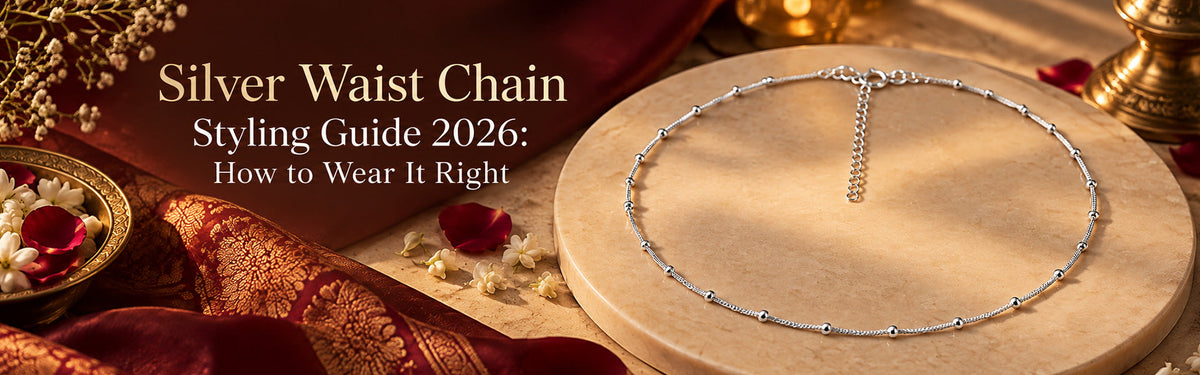
The Kamarbandh Is Having Its Biggest Moment in a Generation. Here Is How to Wear It Without Getting It Wrong.
In September 2026, the silver waist chain is trending at a level it has not reached in modern Indian fashion in decades. The combination of a global body jewellery revival, a renewed interest in traditional Indian adornment, and the practical reality that the waist chain works with the high-waisted silhouettes that dominate both ethnic and contemporary dressing has pushed the kamarbandh back into the centre of the jewellery conversation.
But wearing a waist chain correctly is different from simply putting one on. The length, the weight, the outfit context, the occasion, all of these affect whether the waist chain looks like the most intentional thing you are wearing or like an afterthought that got caught on your skirt. Here is the complete 2026 guide.
The Outfit Pairings That Work Consistently
The saree is the waist chain's most natural context because the chain sits in the natural space between the blouse and the drape, adding definition to the waist without adding volume. A fine silver chain in 925 sterling silver sits against silk, cotton, or georgette with equal elegance. The rule here is proportion: a heavy, intricate waist chain on a heavily embroidered saree creates competition for the eye. A delicate chain on an embroidered saree creates balance.
With lehenga sets at weddings, the waist chain functions as a transitional piece between the choli and the skirt, and at this occasion context a slightly heavier chain with more detail is appropriate because the overall aesthetic is already maximalist.
For contemporary outfits, the waist chain worn over a crop top with high-waisted trousers or a skirt is the 2026 fashion moment that has pushed the piece into trend conversations globally. Here the chain needs to be fine and clean, anything too ornate reads as costume rather than fashion.
Browse the waist chain collection: https://touch925.com/collections/waist-chains
How to Size a Waist Chain Correctly
A waist chain should sit at the natural waist for the most flattering effect, not at the hips. The natural waist is the narrowest point of the torso, typically two to three finger-widths above the navel. Measure this circumference and add two to three centimetres for a chain that sits flat without pulling.
Most Touch925 waist chains include extension chains that allow adjustment across a range, which removes the sizing anxiety from the purchase. Check individual product pages for the size range each piece covers.
Layering Waist Chains
The 2026 waist chain trend also includes layering, wearing two chains at slightly different positions on the waist simultaneously. A finer chain sitting at the natural waist with a slightly heavier or more detailed chain sitting one to two centimetres below creates a layered effect that reads as intentional rather than accidental. Keep both chains in the same metal family, all 925 sterling silver, and vary the texture rather than the tone.
Occasion Guide: When to Wear Which
For daily office wear, the finest and most minimal chain in your collection creates a waist accent that reads as contemporary fashion rather than traditional jewellery, which is the right register for a professional setting. For festive occasions and weddings, a heavier, more intricate design is appropriate. For garba during Navratri, lightweight designs that move well and do not risk catching on other people or clothing are the practical choice.
Browse the full waist chain collection: https://touch925.com/collections/waist-chains or visit us at Kohat Enclave, Pitampura, New Delhi.
Frequently Asked Questions
1. Why is the silver waist chain trending so strongly in September 2026?
The waist chain revival is driven by the convergence of several trends: the global body jewellery movement, the return of high-waisted silhouettes in both ethnic and western dressing, and a renewed pride in traditional Indian adornment across young Indian women. The kamarbandh specifically has been highlighted in multiple Indian fashion publications and social media conversations in 2026 as one of the most significant jewellery trends of the year.
2. Can a waist chain be worn with a saree if the saree has a readymade petticoat?
Yes. The waist chain sits over the petticoat and under the saree drape, positioned at the natural waist. It creates definition and holds the drape in place subtly, which is one of the practical advantages of the kamarbandh in the saree context beyond aesthetics.
3. Is a silver waist chain appropriate for daily wear?
Yes, specifically in its finer, more minimal designs. 925 sterling silver is lightweight and durable enough for daily use. Removing it before showering and wiping it down after wearing prevents tarnish from accumulating. Touch925's free lifetime plating covers the finish through daily wear.
4. How do I prevent a waist chain from slipping down during the day?
A waist chain that is correctly sized, sitting at the natural waist with just enough tension to stay flat without pinching, does not slip significantly during the day. A chain that slips is usually too large for the position it is meant to sit at. Extension chains allow fine-tuning the length to prevent this.
5. What is the difference between a waist chain and a hip chain?
A waist chain sits at the natural waist, the narrowest point of the torso. A hip chain sits lower at the hip bone. The two have different effects: the waist chain creates waist definition while the hip chain creates hip emphasis. In Indian traditional jewellery, the kamarbandh is typically worn at the natural waist. Contemporary styling plays with both positions depending on the outfit and the silhouette being created.