Tortoise Symbolism and Cultural Significance in Indian Tradition
Introduction
Across many cultural traditions, the tortoise has long been associated with patience, stability and enduring strength. Because of its slow and steady nature, the tortoise often symbolizes resilience, protection and longevity in stories, mythology and artistic traditions.
In Indian cultural contexts, the tortoise carries additional layers of meaning connected with balance, harmony and the sustaining forces of nature. References to the tortoise appear in ancient literature, spiritual teachings and symbolic art.
Because of these associations, tortoise figures have appeared for centuries in temple carvings, sacred objects and decorative sculptures. Today the form of the tortoise continues to be appreciated both as a symbolic figure and as a motif used in traditional craftsmanship.
The Meaning and Symbolism of the Tortoise
The tortoise is often interpreted as a symbol of patience, stability and long life. Its protective shell represents resilience and the ability to remain grounded even during changing circumstances.
In many cultural interpretations, the slow movement of the tortoise reflects the idea that steady progress and persistence often lead to lasting results. This symbolism has appeared in stories, philosophical teachings and artistic traditions across many cultures.
The protective shell of the tortoise is also sometimes associated with security and protection. Because the animal can withdraw safely within its shell, it represents the idea of safeguarding stability and maintaining balance even during uncertain times.
For these reasons, the tortoise has remained a meaningful symbol in decorative art, sculptures and traditional objects created by artisans.
Tortoise in Hindu Mythology and Cultural Tradition
The tortoise holds an important place in Hindu mythology through the story of Kurma, the tortoise incarnation of Lord Vishnu.
According to traditional narratives connected with the Samudra Manthan, or the churning of the cosmic ocean, Lord Vishnu took the form of a tortoise to support Mount Mandara, which served as the churning rod during the event.
In this story the tortoise represents stability and support, as it carries the weight of the mountain and maintains balance while the cosmic ocean is churned.
Because of this mythological connection, the tortoise came to symbolize the quiet strength that sustains harmony and order in the universe.
Stories connected with Kurma appear in several traditional texts and have influenced artistic depictions in temples and devotional art across India.
The Ashtalakshmi Tortoise and Its Symbolic Meaning
In some artistic interpretations, the image of the tortoise is combined with the symbolism of Ashtalakshmi, the eight forms of Goddess Lakshmi associated with prosperity and wellbeing.
The term Ashtalakshmi refers to eight manifestations of Lakshmi that represent different aspects of prosperity, including wealth, knowledge, courage, success and nourishment.
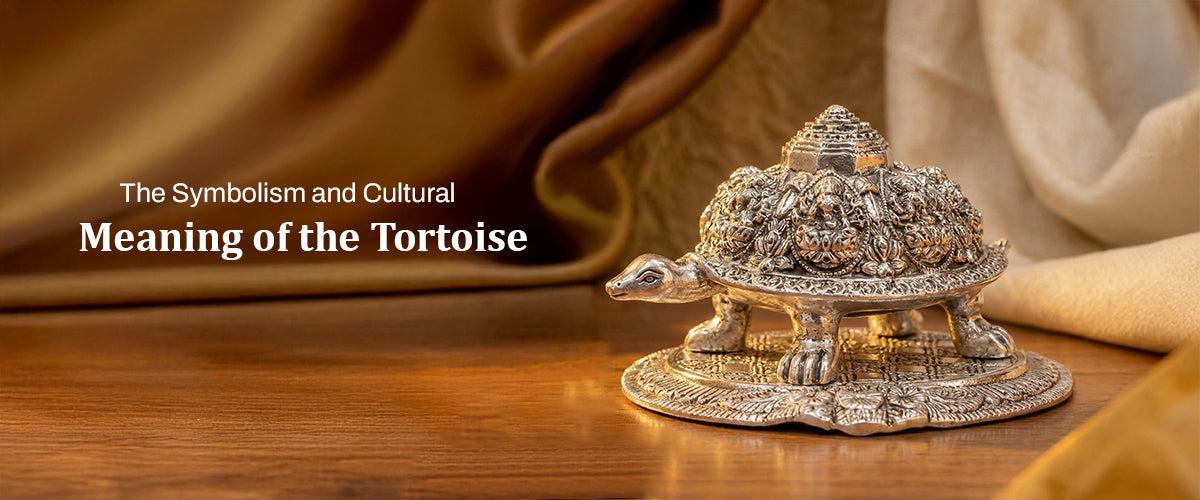
An Ashtalakshmi tortoise may feature engravings or artistic representations connected with these eight forms of Lakshmi. This design combines the symbolism of the tortoise with the cultural significance associated with Lakshmi.
Because Lakshmi is widely regarded as a symbol of prosperity and abundance, decorative sculptures that incorporate these elements reflect traditional themes of balance, wellbeing and continuity.
Such artistic designs are appreciated both for their cultural symbolism and for the craftsmanship involved in creating detailed sculptures.
Tortoise Figures in Homes and Decorative Spaces
In many households decorative objects are placed in areas that reflect personal taste, cultural identity or spiritual interest. Animal motifs with symbolic meanings have appeared in home décor across many cultures for centuries.
The tortoise is one such symbol that has been represented in sculptures and artistic pieces because of its association with stability and longevity.
Across India artisans have traditionally crafted sculptures using materials such as stone, brass, copper and silver. These materials allow detailed forms to be created while preserving durability and artistic elegance.
A tortoise sculpture may be placed on a table, shelf or display space as part of a decorative arrangement. In some households symbolic sculptures are also placed in quiet corners used for reflection or prayer.
Rather than being viewed only as decorative objects, these sculptures often represent cultural ideas and stories that have been passed down through generations.
Silver Tortoise Idols and Traditional Silver Gift Items
Metal craftsmanship has played an important role in the creation of decorative and ceremonial objects across Indian cultural traditions.
Artisans have long used metals such as brass, copper and silver to shape sculptures that combine artistic beauty with symbolic meaning. Silver in particular has been widely used for decorative objects because it allows intricate detailing while maintaining durability.
Among these creations, silver tortoise idols highlight the delicate craftsmanship involved in shaping symbolic forms in metal.
Because of their cultural symbolism and artistic design, tortoise sculptures sometimes appear among traditional silver gift items crafted by skilled artisans.
Across occasions such as housewarming ceremonies, anniversaries and festive celebrations, decorative objects made from precious metals are often chosen as meaningful silver gifts.
Among many silver gift items, symbolic sculptures like the tortoise are appreciated not only for their artistic appeal but also for the cultural symbolism they represent.
A Symbol That Endures
The tortoise has remained a meaningful symbol across centuries of cultural storytelling and artistic expression. Representing patience, stability and resilience, it reflects the idea that steady progress and inner strength support lasting harmony.
Through mythology, philosophy and decorative art, the image of the tortoise continues to carry cultural significance.
Whether appearing in temple carvings, traditional sculptures or handcrafted objects, this enduring symbol reflects the timeless values of balance, perseverance and thoughtful progress.
FAQ
What does the tortoise symbolize?
The tortoise is commonly associated with patience, stability, longevity and resilience across many cultural traditions.
Why is the tortoise important in Hindu mythology?
The tortoise is connected with the Kurma incarnation of Lord Vishnu, who supported Mount Mandara during the churning of the cosmic ocean.
What is an Ashtalakshmi tortoise?
An Ashtalakshmi tortoise is a decorative sculpture that combines the symbolism of the tortoise with artistic representations connected with the eight forms of Goddess Lakshmi.
Why are tortoise sculptures used in decorative art?
Because the tortoise symbolizes stability and longevity, it has appeared in artistic sculptures and decorative objects across many cultural traditions.
Why are tortoise sculptures sometimes crafted in silver?
Silver allows artisans to create detailed sculptures and has traditionally been used in decorative objects and ceremonial items.
Can tortoise sculptures be given as gifts?
Yes. Decorative sculptures crafted from precious metals are often chosen as meaningful silver gifts or traditional silver gift items during special occasions.