Evil Eye Meaning and Origins, The Story Behind Our Most Loved Trend
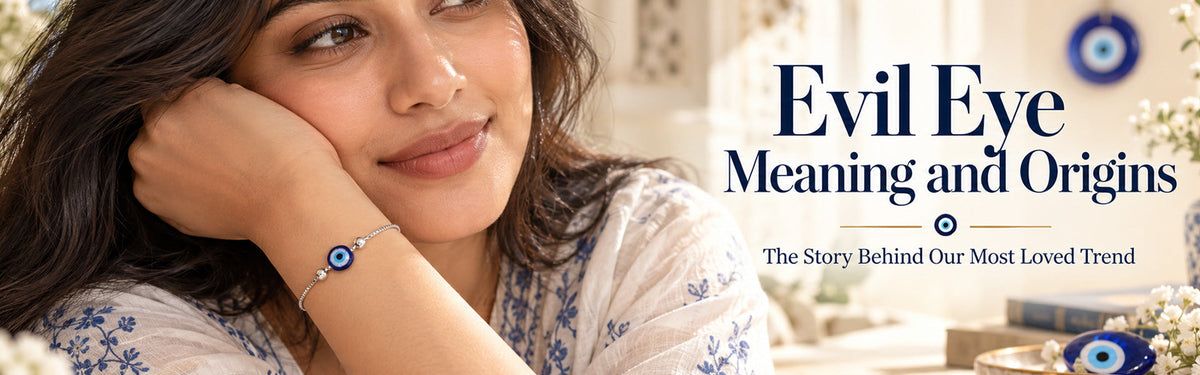
Scroll through any jewellery feed right now and the evil eye is everywhere, on bracelets, rings, pendants, even printed on phone cases and tote bags. It has become such a familiar visual that most people wearing it today have probably never actually stopped to ask where it came from or what it originally meant. It is a fair question, and honestly, the answer is a lot more interesting than most passing trends can claim.
A Symbol Older Than Almost Anything Else We Wear
The evil eye is not a new invention dressed up in modern packaging. Its roots stretch back thousands of years, appearing independently across regions as far apart as the Mediterranean, the Middle East, and South Asia, all converging on a strikingly similar belief. A look filled with envy or ill will, whether intentional or not, could bring misfortune to the person it was directed at, and wearing a protective symbol was a way to deflect that energy before it could take hold.
What makes this particularly fascinating is that so many unrelated cultures arrived at a similar protective concept independently, suggesting it taps into something fairly universal about human psychology, the discomfort of being watched, envied, or singled out, and a deep, shared instinct to want protection from that.
How the Symbol Found Its Way Into Indian Tradition
In India specifically, the concept exists under the name nazar or nazariya, deeply woven into everyday household customs long before it ever became a jewellery trend. Think of the small black dot applied to a baby's forehead, or the string of lemons and chillies hung outside a new shop or home. These are not decorative choices, they are rooted in the exact same protective belief that the modern evil eye jewellery trend draws from.
This is actually part of what makes evil eye jewellery feel so natural within Indian households today. It is not really a foreign trend being adopted, it is a modern, wearable version of a belief that many families already practiced in other forms for generations.
From Household Ritual to Everyday Jewellery
The shift from ritual object to jewellery piece happened gradually, as designers began incorporating the symbol into wearable, everyday pieces rather than keeping it confined to traditional talismans or household charms. This made the symbolism far more accessible, something you could carry with you throughout the day rather than something tied to a specific object left at home.
Touch925's No Bad Vibes collection reflects exactly this evolution, taking a belief with genuine historical depth and translating it into pieces that fit naturally into a modern jewellery rotation, worn daily rather than reserved for a specific ritual moment.
Why the Symbolism Still Resonates Today
Even for people who do not necessarily hold strong superstitious beliefs, the evil eye continues to resonate because the underlying sentiment behind it is genuinely relatable. Everyone has experienced moments of feeling scrutinised, envied, or simply overwhelmed by outside energy, and wearing a piece tied to protection offers a small, tangible sense of comfort, regardless of how literally someone interprets the symbolism.
This is part of why the trend has stayed relevant far longer than most purely aesthetic jewellery movements. It carries genuine meaning underneath the style, which gives it a kind of staying power that trend driven pieces without any real substance rarely achieve.
The Design Evolution Worth Knowing About
Traditional evil eye designs typically feature a blue and white colour scheme, drawing from Mediterranean glasswork traditions where the symbol was often crafted from cobalt blue glass. As the trend has spread and evolved, designers have started reinterpreting the motif in different metals and settings, including the silver and zircon detailing seen throughout Touch925's Infinity Evil Eye CZ Bracelet, which reimagines the classic symbolism in a more contemporary, versatile format.
This kind of reinterpretation has allowed the symbol to move beyond its original visual conventions while still preserving the core meaning behind it, which is really the mark of a design tradition evolving rather than disappearing.
Wearing the Symbol With Understanding
There is something nice about wearing a piece of jewellery once you actually understand the story behind it, rather than simply following a trend because everyone else is wearing it too. The evil eye carries centuries of belief, cultural crossover, and genuine human sentiment behind its design, which adds a layer of depth to what might otherwise seem like just another accessory.
Whether you wear it out of genuine belief, cultural connection, or simply because you appreciate the design, understanding where it comes from makes the piece feel a little more meaningful every time you put it on.
Frequently Asked Questions
Q. Is the evil eye symbol connected to a specific religion?
A. No, it appears independently across many different cultures and belief systems throughout history, which is part of why it has become such a widely recognised, non exclusive symbol today.
Q. What is the difference between the evil eye and the Indian concept of nazariya?
A. They share the same core protective belief, warding off envy or ill will, though nazariya specifically refers to the Indian cultural tradition, often expressed through household customs alongside jewellery.
Q. Why is blue traditionally associated with evil eye jewellery?
A. The colour traces back to Mediterranean glasswork traditions, where the symbol was originally crafted using cobalt blue glass, a colour association that has carried through many modern interpretations of the design.
Q. Do you need to believe in superstition to wear evil eye jewellery?
A. Not at all. Many people wear it simply for its design or its cultural and historical significance, without needing to hold a literal belief in its protective power.
Q. Has the evil eye design changed much from its traditional form?
A. Yes, while the core motif remains recognisable, modern jewellery has reinterpreted it across different metals, settings, and design styles, moving well beyond the original blue glass talisman format.