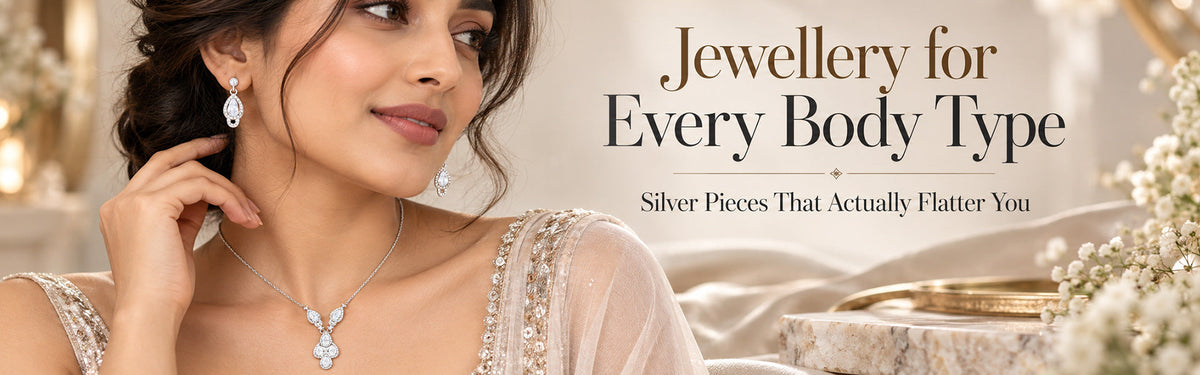
Jewellery for Every Body Type, Silver Pieces That Actually Flatter You
Most jewellery styling advice online follows the same tired formula, a handful of generic tips repeated across a thousand different articles, rarely acknowledging that bodies are not all built the same way. What genuinely flatters a longer neck does not necessarily work the same way on a shorter one, and the same goes for wrist size, face shape, and general proportion. If you have ever bought a piece because it looked stunning on someone else, only to feel a little disappointed once you tried it on yourself, this is exactly why.
Here is a proper look at how to actually choose jewellery based on your own proportions, rather than following advice that assumes everyone is built identically.
Necklaces and Neck Length, Getting the Proportion Right
Neck length plays a bigger role in necklace styling than most people realise. For a shorter neck, longer necklaces, particularly those that fall below the collarbone, tend to create a more elongating effect, drawing the eye downward and visually adding length. A layered necklace set from the necklace collection, styled with varying lengths, works particularly well here, avoiding anything that sits too tightly around the neck itself.
For a longer neck, shorter chokers or necklaces that sit close to the collarbone tend to look more balanced, filling the space rather than emphasising additional length that is already naturally present.
Earrings and Face Shape, A Genuinely Useful Pairing
Earring shape has a real, noticeable impact depending on your face shape. For rounder face shapes, longer, more angular drop earrings from the earrings collection tend to add definition and length, softening the roundness with a bit of visual structure.
For more angular or longer face shapes, rounder stud or hoop styles tend to balance things out nicely, softening sharper features without competing with them.
Bracelets and Wrist Size, A Detail Worth Paying Attention To
Wrist size significantly affects how a bracelet actually sits and looks. Thinner wrists tend to be overwhelmed by chunky, oversized bracelet designs, where a slimmer piece from the women's bracelets collection tends to look far more proportionate and comfortable.
For a fuller wrist, a slightly wider bangle style piece often looks more balanced than something overly delicate, which can end up looking visually lost against a larger wrist rather than complementing it.
Rings and Finger Length, The Most Overlooked Category
Ring styling based on finger proportion rarely gets discussed, but it genuinely makes a difference. For shorter fingers, a ring with a vertical design element, like an elongated stone setting from the rings collection, creates a subtle lengthening effect. Wide, horizontal band designs, on the other hand, can sometimes make shorter fingers appear even shorter by cutting across the finger's natural line.
For longer fingers, wider band designs tend to look particularly striking, since there is more visual space for a bolder design to sit comfortably without appearing disproportionate.
Layering Based on Your Own Proportions
Layering necklaces and bracelets works a little differently depending on your body type too. For a smaller frame, keeping layered pieces relatively delicate and close together tends to look more proportionate, while a larger frame can generally handle slightly bolder, more spaced out layering without it appearing overwhelming.
This is really about scale rather than any rigid rule, choosing pieces that feel proportionate to your own frame rather than directly copying a layered look from someone with entirely different proportions.
Why Generic Styling Advice Often Misses the Mark
A lot of styling content treats jewellery as one size fits all, offering broad tips without acknowledging that the same necklace length or earring shape can look completely different depending on individual proportions. This is not about rigid rules that everyone must follow, but about understanding your own features well enough to make more confident, informed choices rather than simply copying a trend without considering whether it actually suits you.
Building Confidence Through Better Fit
Once you start paying attention to proportion rather than just trend, jewellery shopping genuinely becomes easier and more satisfying. Instead of buying pieces that look good in isolation but feel slightly off once worn, you start choosing pieces that are actually flattering on you specifically, which makes a noticeable difference in how confident and put together you feel wearing them.
A More Thoughtful Way to Shop
Jewellery should work with your natural proportions, not against them, and understanding a few basic principles around body type and styling makes a real difference in how a piece ultimately looks and feels. Touch925's wide range across necklaces, earrings, bracelets, and rings gives you the flexibility to choose pieces genuinely suited to your own proportions, rather than settling for whatever happens to be trending at the moment.
Frequently Asked Questions
Q. What necklace length works best for a shorter neck?
A. Longer necklaces that fall below the collarbone tend to create an elongating effect, making them a flattering choice for shorter necks.
Q. How does face shape affect which earrings look best?
A. Rounder face shapes tend to suit longer, more angular earrings, while angular or longer face shapes are often balanced out well by rounder stud or hoop styles.
Q. Should thinner wrists avoid chunky bracelet designs entirely?
A. Not entirely, but slimmer, more proportionate bracelet designs generally look more balanced on thinner wrists compared to oversized, chunky styles.
Q. Do ring designs really make a visible difference based on finger length?
A. Yes, vertical design elements can create a subtle lengthening effect for shorter fingers, while wider band designs tend to suit longer fingers particularly well.
Q. Is body type based styling advice a strict rule, or more of a general guideline?
A. It is best treated as a general guideline rather than a strict rule. Personal style and preference should always play a role alongside these general proportion based tips.